

I put both through workouts, sleep, and stress tests—guess which one actually tracked my life better?
I pit two wrist rivals, Fitbit and Garmin, against my daily chaos. I tested both Amazon-sold trackers side-by-side to judge real-world comfort, accuracy, battery life, and app experience so you can decide which suits your daily routine and fitness goals.
Health Leader

I find the tracker excellent for detailed health monitoring and on-wrist stress tools; its built-in GPS and EDA/ECG capabilities stand out for a device in this class. Battery performance is solid for daily use but limits appear when relying heavily on GPS. Overall, it balances advanced health features with a refined look, though some functionality is gated behind Premium.
Everyday Tracker

I appreciate the vivosmart 5 for its straightforward, comfortable fit and dependable day-to-day health tracking. The Body Battery and sleep insights offer practical guidance without complexity, and battery life is impressive for continuous use. If you need standalone GPS or advanced EDA/ECG sensors, this model is more limited compared with higher-tier trackers.
Fitbit Charge5
Garmin Vivosmart
Fitbit Charge5
Garmin Vivosmart
Fitbit Charge5
Garmin Vivosmart
Design, Fit, and Display: Everyday Wearability
Build & materials
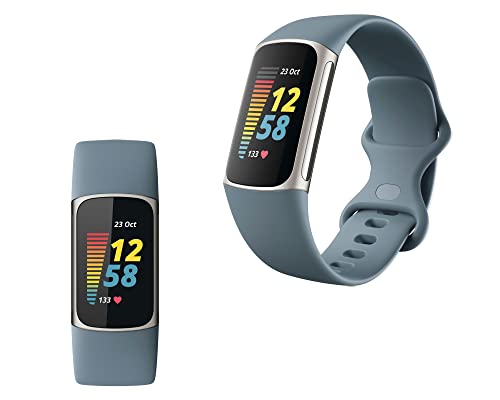
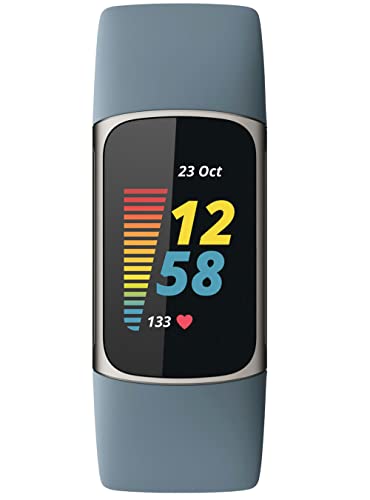
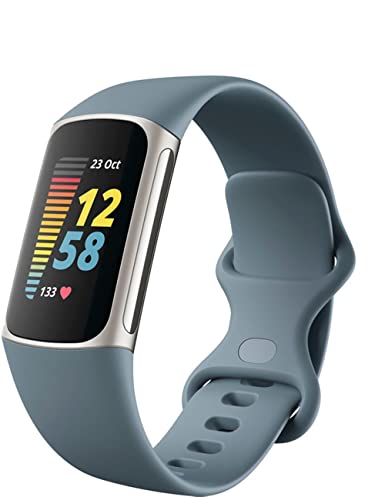
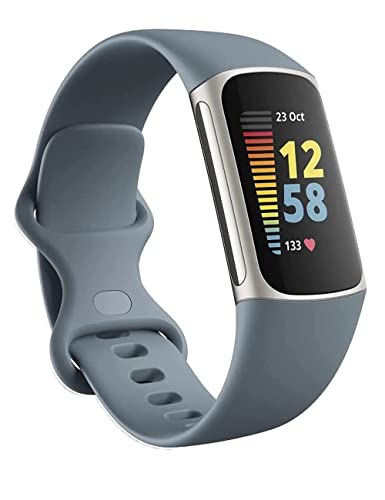
The Charge 5 feels premium — a slim stainless-steel case with a polished finish that sits flat on my wrist. It looks dressy enough for work but still athletic. The vívosmart 5 is lighter and more utilitarian: soft-touch polymer that stays unobtrusive.
Strap, comfort, and putting it on
Fitbit’s Power Bundle includes an Infinity band (small and large), which hugs my wrist securely; it takes a second to stretch on but stays put during runs. Garmin’s standard silicone strap is lower?profile and easier to fasten/replace with quick-change bands — I found it faster to swap for sleep or exercise. The vívosmart 5 wins for “I forget I’m wearing it” comfort over a full day.


Screen responsiveness & glanceability
Charge 5’s bright color touchscreen is responsive to taps and swipes and displays richer on?wrist graphs, maps (with GPS), and notifications. vívosmart 5 goes simpler: larger monochrome text and a straightforward UI that’s faster to read at a glance, especially while moving.
Fit impact on heart-rate & sleep sensing
Both need a snug, stable fit for continuous heart-rate and sleep tracking. Charge 5’s flat profile gives steady sensor contact; vívosmart’s lightness reduces overnight disturbance. In short:
Health, Fitness Tracking, Battery, and App Experience: Accuracy and Usability
GPS & activity tracking
I tested outdoor runs and walks: the Charge 5’s built?in GPS gave on?wrist pace and clean route maps — helpful when I left my phone at home — but continuous GPS cut battery fast. In mixed-surface runs it tracked distance within 2–3% of my phone GPS.
The vívosmart 5 relies on connected GPS. When my phone stayed in my pocket it produced consistent distance and pace, but startup depends on phone signal and pairing; if my phone’s GPS lagged, the route looked jumpy.


Heart rate, steps, sleep & SpO2
I found Charge 5 a touch more responsive during interval runs and better at capturing quick HR spikes. Both trackers were comparable for step counts. Overnight, Charge 5’s sleep stages and Sleep Score are richer; vívosmart’s Body Battery + sleep score gave clearer recovery context. Pulse Ox on Garmin is reliable; Fitbit adds EDA/Stress and ECG support for deeper metrics.
Battery, auto-detection & app syncing
Real use: Charge 5 lasted ~4–6 days with mixed use, ~5 hours continuous GPS; vívosmart 5 routinely hit 6–7 days with light GPS use via phone. Auto activity detection: Fitbit’s SmartTrack flags more workouts; Garmin’s detection is conservative but less noisy. Fitbit app is more beginner-friendly and visual; Garmin Connect is better for exporting workouts and deeper training analysis. Syncing was generally reliable on both, with occasional Fitbit connectivity hiccups.
Who I’d recommend:
Feature Comparison Chart
Final Verdict: Which One I Recommend
I recommend the Fitbit Charge 5 as my overall winner; it delivers richer health metrics, built in GPS and superior app insights for detailed tracking.
Choose the Garmin vívosmart 5 for simple, discreet wear and exceptional battery life; it is the reliable low fuss daily tracker I use when I want maximum everyday uptime.
Pros and cons list from my experience:
1) Comfort: Vivosmart 5 wins — super light and I forget it’s on.
2) Tracking: Charge 5 gives more data (HR variability, EDA, skin temp sometimes) but sometimes overreads.
3) App: Fitbit app is prettier and more social; Garmin Connect is more technical.
4) Battery: Garmin lasts longer in normal use, no surprise there.
5) Price/value depends if you actually use the extra Fitbit metrics.
If you’re into data nerding, Charge 5. If you want ‘set it and forget it’, go Vivosmart.
Garmin tends to focus on heart-rate and performance metrics; they have their own stress scoring using HRV but it’s not exactly the same as Fitbit’s EDA. No formal word on EDA from Garmin right now.
Totally agree on the app differences. Fitbit’s social bits got me walking more (shameful but effective).
Does anyone know if Garmin ever plans to add the same EDA/stress sensing features? I like the lightness but would love better stress tracking.
Great breakdown, Priya — that’s basically the conclusion we reached too. Thanks for adding the point about EDA/skin temp — not everyone uses those but they can be a differentiator.
Nice write-up! I’ve been on the fence between the Charge 5 and the Vivosmart 5.
Love that the Fitbit has built-in GPS in the Power Bundle — that’s a big deal for me when I run without my phone.
But how’s the battery holding up with GPS on? Anyone tested multi-day runs?
FWIW I pair my Vivosmart to my phone and the battery lasts waaaay longer. No maps but if you just want distance/pacing it’s great.
Thanks Emma — glad it helped! With the Charge 5, GPS will drain battery faster; expect roughly 6–12 hours of continuous GPS tracking depending on settings. Garmin’s Vivosmart 5 doesn’t have built-in GPS, so it conserves battery but needs your phone for accurate route tracking.
I use Charge 5 on weekends for 2–3 hour trail runs and it’s fine. If you start doing ultra runs you’ll need a backup power bank lol.
Heads up: Fitbit pushes Premium features a lot and honestly it felt like a paywall for some of the nicer sleep/health reports. If you don’t want ongoing fees, Garmin might be less annoying.
Fair point. Fitbit does highlight Premium content. If you want everything out-of-the-box without subscription, Garmin is usually more straightforward.
One workaround: use the free trials and export data periodically if you’re keen on archiving but not subscribing long-term.
Quick technical quibble: heart rate accuracy varies a lot between wrist devices when you’re doing intervals. On treadmill sprints the Charge 5 seemed to overshoot peaks, while the Garmin smoothed them out (maybe too much smoothing?).
Also, Fitbit requires a subscription for some advanced sleep insights — anyone keep track of what features are behind paywalls now?
I think the Charge 5 algorithm tries to be more reactive which causes spikes; Garmin averages more for stability. Depends which you prefer.
I tested both during HIIT and both had moments of inaccuracy. Chest strap > wrist for that kind of workout if you need exact HR.
No premium here — basic sleep + HR works for me. But yeah, if you want daily insights/analysis, Fitbit pushes Premium hard.
Good note — chest straps still the gold standard for workout HR precision. Wrist devices are getting better, but optical sensors have inherent limits.
Correct — Fitbit Premium gates some deeper sleep analyses, guided programs, and long-term trend insights. The sensors still collect basic sleep stages without subscription.
Garmin’s smoothing approach is more consistent for HR in short bursts but can miss spikes.
I ended up choosing the Vivosmart 5 because of battery life and the minimalist look. I do miss Fitbit’s ECG and color screen a bit, but it’s so comfy I actually sleep with it every night.
If you value aesthetics and health extras -> Charge 5. If you want battery + simplicity -> Garmin.
Also, the strap of the Vivosmart is ridiculously easy to clean, which matters when you sweat a lot. ????
Can confirm — silicone strap on the Vivosmart is a breeze to wash. Fitbit bands can trap sweat a bit more depending on the material.
Totally — cleanliness and strap comfort are underrated factors. Glad Vivosmart worked for you.
@Samir yeah I switched to a sport band for Fitbit once but still preferred the slim Garmin band overall.
Bought the Garmin for my dad and he loves it — battery lasts forever and he can finally stop asking me where his phone is ?
Also the black band is discreet, which he prefers.
Haha same — got it for my mum. She said it looks like a bracelet, not a clunky watch, so she wears it every day.
Sleep tracking on the Charge 5 felt more detailed to me — I could see restless periods and it nudged me to wind down. Also the stress notifications are kinda useful ?
But battery life — I miss the ‘set it and forget it’ vibe of my old band. ?
Glad the sleep features helped! If you use wind-down routines a lot, Fitbit leans into that ecosystem.
Anyone know if the bands are interchangeable? I like to switch colors and sometimes wear a leather band for work.
Fitbit seems to have more accessory options, but are they easy to swap?
I change bands weekly. Charge 5 is super easy; the Vivosmart takes a bit more fiddling but doable.
Fitbit Charge 5 uses quick-release bands and there are many third-party options. Vivosmart 5’s band is more integrated but there are replacement bands too — just fewer styles. Swapping Fitbit bands is easier overall.
I’ve tried both for a month each. Few notes:
– Charge 5: better for sleep and stress tracking, nicer screen, needs more charging.
– Vivosmart 5: unbeatable battery life, subtle look, no built-in GPS which annoyed me when I forgot my phone.
– Both have decent notifications but neither replaces a full smartwatch if you want apps.
Bottom line: pick based on what you actually use (GPS, sleep, battery).
Notifications can be delayed depending on phone OS and Bluetooth interference. Both brands have occasional hiccups; keeping apps updated helps.
Also worth noting: Garmin Connect syncs with a lot of fitness platforms, which is great if you’re into Strava etc.
For me it was the lack of GPS on Garmin that was a dealbreaker — but if you run with your phone, the Vivosmart is a battery champ.
Exactly this. I bought a Charge 5 for sleep insights then switched back to Garmin for daily wear because I hated daily charging.
Anyone else find notifications a bit laggy on the Fitbit? Sometimes they show up late.
Solid summary, Matthew. Thanks for the balanced comparison.
Meh. Both trackers are fine if your goal is ‘I want to feel like I’m healthy by watching numbers’. If you actually change habits, it’s on you, not the band. ?
Long-term durability question: After a year, did anyone notice screen scuffs or band degradation? I keep my gadgets a long time and would like real-world longevity feedback.
Also curious about charge cycle wear — anyone still getting original battery life after a year?
I swap bands seasonally and that helps. For the screen I used a cheap tempered glass protector on my Charge 5 and it saved me a lot of scratches.
If you’re worried, buy with a warranty or a good return policy. Wearables get knicks — protective cases/bands help a lot.
My Vivosmart 5 is almost a year old and the band is a bit stretched but still fine. Battery is slightly reduced but still great compared to when new.
Good question. Anecdotally, Fitbit’s aluminum/stainless Charge 5 can show scuffs on the bezel if you’re rough with it. Bands wear depending on sweat/chemicals. Battery degradation after a year is typically 10–20% depending on charge cycles and usage patterns.
Garmin feels too simplified for the price. The screen is tiny and it’s basically a step counter with good battery.
Fitbit’s design and sleep features are leagues ahead imo.
I disagree a bit — I like simple. I just want something low profile that I can forget about and not charge every 3 days. Garmin wins for me there.
Good point — the Vivosmart 5 is simpler in UI and features, which helps with battery life. Fitbit packs more sensors (and some advanced health metrics) but that comes at the cost of shorter battery and a slightly higher price.