
Pocket rocket, pocket cleaner, or budget workhorse — which tiny box will actually make your music sound better?
I unplugged my speakers and listened on headphones — and things got suspiciously better. I wasn’t expecting miracles, just a cleaner sound; instead I found more detail, better control, and fewer excuses for bad mixes.
I tested three very different DAC/amps for real-world use: a high-end pocket powerhouse, a grab-and-go USB stick, and a budget desktop unit. I focused on sound, power, portability, and features so you can pick the right tool for your headphones and listening habits.
Top DACs & Amps
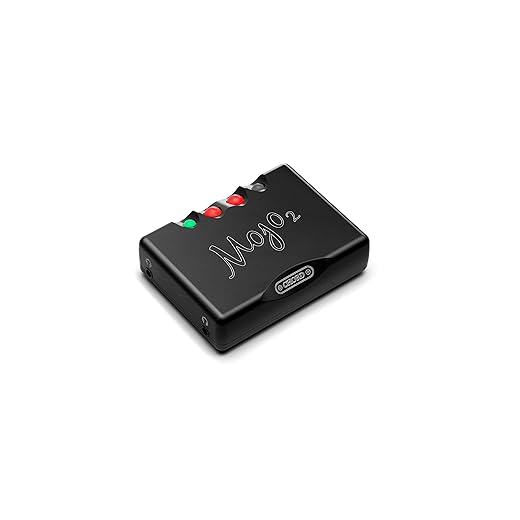

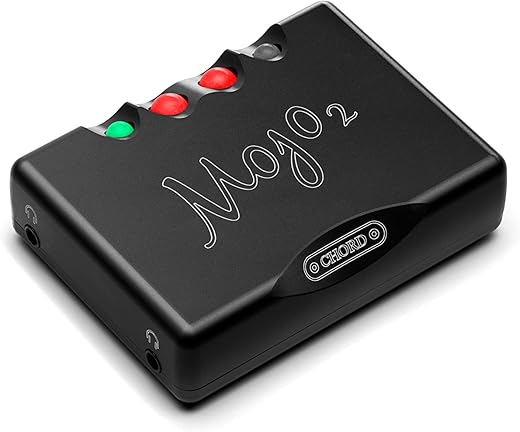
Chord Mojo 2 Portable DAC/Amp
I found it delivers a level of resolution, control, and musicality that is rare in a pocketable unit. It balances excellent battery life and multiple inputs with a refined, dynamic sound that rewards careful listening.
Why I reached for this unit
I use this device when I want reference-level detail on the go without sacrificing ergonomics. In everyday listening it brought noticeably clearer transients, tighter bass, and a three-dimensional soundstage compared with most USB dongles and many desktop budget DACs I’ve tried.
Key features I rely on
How it fits into real setups
I used it with both in-ear monitors and over-ear headphones; the Mojo 2 consistently improved clarity and layer separation. It’s a great match with efficient headphones and most mid-impedance sets. For very power-hungry planar models I noticed the amp section approaches its limits, so pairing with a small dedicated amp or choosing more efficient cans makes sense.
Practical notes and limitations
I appreciate how the Mojo 2 balances portability and uncompromising sound; it’s not a budget pick, but for me it’s the easiest way to get reference sound away from my desk.
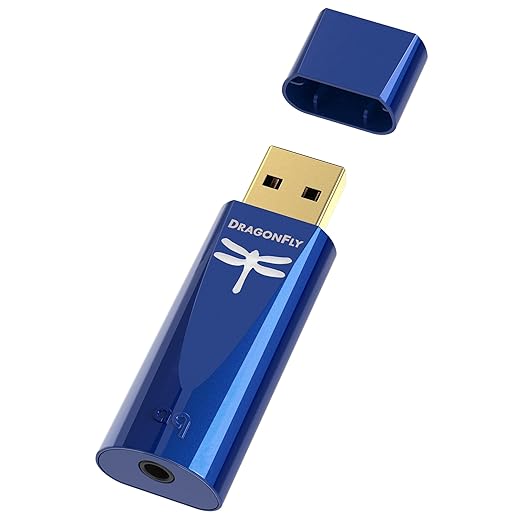
AudioQuest Dragonfly Cobalt USB DAC
I found it offers a meaningful upgrade over smartphone or laptop audio with minimal fuss and excellent portability. It’s especially effective for listeners who want better clarity and musical detail without a complex setup.
Why this dongle matters to me
I use this tiny USB DAC when I want a sonic uplift while commuting, traveling, or adding clarity to a laptop-based listening session. Despite its size it consistently reveals more micro-detail, cleaner transients, and a wider, more natural soundstage than built-in phone or laptop DACs.
What it offers technically and practically
Real-world usage notes and limitations
In my listening notes I heard appreciable improvements on both efficient over-ears and decent IEMs; percussion gained snap, vocals gained presence, and mixes felt less cluttered. That said, it’s not a desktop powerhouse—its output and sample-rate ceiling are intentionally conservative to keep power draw and size low. When used with older phones or some Android devices I had to account for extra adapters or a host cable; in a car or strict mobile setup you may need a powered OTG solution.
Final practical takeaway
If you want simple, immediate sonic gains from a pocketable device, this is one of the easiest ways to get them. It’s the kind of upgrade I recommend to people who listen on the go and want a clear, musical improvement without learning a complicated chain.
iFi Zen DAC V2 Desktop DAC/AMP
I found it offers an impressive set of features for its price, including balanced output and MQA decoding. It’s a flexible, room-friendly upgrade that noticeably cleans up noisy laptop and onboard audio.
What this device is for
I reach for this DAC when I need a compact, affordable desktop upgrade that works with both headphones and active speakers. It’s aimed at listeners who want better clarity and warmth than typical integrated audio delivers, without breaking the bank.
Notable technical highlights
How it performs in daily use
In my experience it cleans up the midrange and smooths treble compared with laptop onboard audio. The PowerMatch and TrueBass controls are practical—PowerMatch helps with low-sensitivity headphones, while TrueBass can compensate for thin-sounding IEMs without adding obvious bloom. The balanced output is a standout at this price and noticeably reduces noise with sensitive sources.
Caveats and tips
Overall I think this is one of the most pragmatic buys for someone wanting a true audible step-up from integrated audio while keeping a modest budget.
Final Thoughts
If you want a single, uncompromising portable unit that will elevate everything from delicate folk to busy orchestral tracks, buy the Chord Mojo 2. It delivers the highest-resolution sound of the three, strong battery life, and enough control to drive demanding headphones and reveal subtleties most pocket DACs miss. I recommend it for audiophiles who travel, use high-impedance cans or planars, or who want a pocketable “serious” setup.
If you mainly listen at a desk and want the biggest bang-for-buck, get the iFi Zen DAC V2. It gives you balanced outputs, MQA decoding, and clean power for desktop headphones at a modest price — perfect as a room-friendly upgrade for laptops and home rigs. The AudioQuest Dragonfly Cobalt is my pick if you prioritize plug-and-play mobile simplicity: great clarity in a tiny USB stick and an excellent option for commuters who want major improvement without extra boxes.
FAQ
Short answer: maybe. If you use earbuds or cheap headphones, the upgrade will be modest but noticeable — cleaner highs and better staging. If you use high-quality headphones or lossless/high-res streams, a dedicated DAC/amp (like the Mojo 2 or Dragonfly Cobalt) will clearly improve detail, dynamics, and noise floor.
Yes — but with caveats. The Chord Mojo 2 has the most headroom and can handle many higher-impedance or planar models well. The iFi Zen DAC V2 offers balanced output and solid desktop power for demanding cans. The Dragonfly Cobalt is more suited to efficient headphones and IEMs; it’s great for mobile use but limited with very power-hungry full-size planars.
MQA is polarizing. If you subscribe to Tidal Masters or use MQA content, the Zen DAC V2’s decoding can provide a convenient way to play those tracks correctly. If you stick to local FLACs or lossless streaming without MQA, the feature won't change much. I treat MQA support as a bonus, not a dealbreaker.
Battery life depends on volume and headphones, but in my testing the Mojo 2 commonly hit several hours of continuous use — enough for long commutes or airplane sessions. Expect less runtime with power-hungry planars and higher volumes; for desk use, you can also run it powered and skip battery concerns.
Balanced connections help reduce noise and often deliver a bit more power and improved channel separation. I recommend balanced only if your headphones or setup support it (and you care about squeezing extra performance). For casual listeners, single-ended connections are perfectly fine.
For travel and on-the-go listening pick the Chord Mojo 2 if you want best-in-class portable sound. For minimal fuss mobile use and maximum convenience, the Dragonfly Cobalt is the easy carry-on. For a workhorse at your desk that adds features like balanced out and MQA without breaking the bank, choose the iFi Zen DAC V2.
iFi Zen DAC V2 = budget hero lol ?
I got one as a starter desktop DAC and it made my music actually sound like MUSIC again, not a flat demo tape. MQA decoding was a bit of a rabbit hole — I hear a small improvement on a few tracks, but not a night-and-day change.
Pro tip: if you use sensitive IEMs, watch for a tiny bit of hiss on some units — not a dealbreaker but worth noting. Anyone else noticed hiss or was I just unlucky? ?
Good point about hiss with sensitive IEMs — it can appear with some desktop DACs depending on the gain and tube/noise floor. The Zen V2 generally has a low noise floor, but pairing with very high-sensitivity IEMs can reveal a slight background hiss. Try lowering gain or using the balanced output if available.
Yep, noticed a faint hiss on my 102 dB SPL IEMs. Lowering the volume/gain solved it for normal listening. Still a great value for the price.
Not unlucky — I heard a bit too. But honestly, for <$200 feature set + MQA, it's hard to complain.
No hiss on my over-ears, but I use balanced cables. If you have IEMs that are super sensitive, the issue might be more audible. Otherwise – solid little DAC!
Great roundup — thanks for testing these thoroughly.
I own a Mojo 2 and can confirm the reviewer’s take: it really does feel like a pocketable high-end unit. The resolution and control are noticeably better than my phone or a cheap USB dongle. Battery life has been very good for long commutes, and it drives my over-ear cans well without sounding strained.
Two questions for anyone: 1) Has anyone compared the Mojo 2 to a desktop setup in the same price ballpark? And 2) what cable/adapter do you find most reliable for Android phones? I’ve had flaky OTG connectors before.
I had a similar experience — Mojo 2 beats most dongles but a dedicated desktop amp + DAC at the same price can offer a touch more warmth and power. For adapters I use an Anker USB-C OTG cable and haven’t had issues.
Thanks for sharing your experience, Olivia — glad Mojo 2 is working out. For comparing to desktop setups, the consensus in testing is Mojo 2 trades some power and full-size amp headroom for portability and refinement. For Android, a good-quality USB-C to USB-A adapter (active) or the official manufacturer cable usually reduces flaky connections. If you tell me your phone model I can suggest a specific cable.
I’ll add: avoid cheap micro-OTG adapters with loose connectors. Bought a braided cable with reinforced ends and it’s been rock solid. Also try to use the shortest cable possible to reduce signal issues.
Nice write-up. Quick practical question — does the AudioQuest Dragonfly Cobalt play nicely with Android phones (USB-C)? I travel a lot and want something compact, but I don’t want to fuss with compatibility every trip. Also, does it require power-hungry files to sound good or is it noticeable with Spotify and Tidal?
I use a Dragonfly Cobalt with Pixel and it’s plug-and-play. For Spotify it’s still better than the stock output; you don’t need lossless to notice an upgrade, but lossless/hi-res makes it more obvious.
Dragonfly Cobalt works with many Android phones via a USB-C adapter or a USB-C native connector (some newer models ship with C). It’s very compact and designed for mobile use. For streaming services like Spotify/Tidal, you’ll hear clearer detail and better staging than phone output, but the biggest differences show with higher-bitrate files or high-quality streaming (Tidal HiFi/Master).
Loved the Mojo 2 pick — I bought one after a similar review and it transformed my commute listening. Battery life, soundstage, and detail are all impressive for such a small device. Worth the upgrade from a Dragonfly Cobalt? For me, yes — but depends on whether you need the extra power/clarity.
I upgraded from a Dragonfly to a Mojo 2 and noticed a cleaner top end and more control. If portability with better sound is your priority, go for Mojo 2.
Glad it worked out for you, Nina. Agree — if you want more headroom and refinement, Mojo 2 is a solid upgrade from a Dragonfly. If you mainly need something tiny for casual mobile use, Dragonfly remains a very convenient option.
Technical question for the community: if I primarily use large, high-impedance headphones (300 ohm), am I better off with the Mojo 2 or a desktop unit like the iFi Zen DAC V2? The review mentions Mojo 2 as a pocketable high-end DAC/amp, but does it realistically have enough headroom for demanding cans?
Also — how important is MQA decoding in real listening? Is it worth prioritizing a DAC because of that feature?
MQA is nice if you strategically use Tidal Masters. Otherwise, high bitrate FLAC or WAV gives you most of the benefits. I view MQA as a convenience feature, not a make-or-break one.
Short answer: for 300-ohm headphones, a dedicated desktop amp/DAC typically offers more consistent headroom and easier gain control. Mojo 2 is impressively capable for a portable unit and can drive many higher-impedance cans, but a desktop unit with a beefier amp stage will usually be more comfortable for sustained loud listening.
On MQA: it depends on your listening sources. If you use Tidal Masters or buy MQA files, native decoding can offer some convenience. For most listeners, MQA vs properly mastered FLAC/HI-RES is often a subtle difference, not a night-and-day change.
I have 300-ohm Beyerdynamics and prefer a desktop amp. The Zen V2 can power most headphones fine but I paired it with a small headphone amp for best dynamics. Mojo 2 is fantastic for portability, but I wouldn’t rely on it as my main amp for those cans.
Mojo 2 drove my Senns at decent levels but margin was small at high volumes. If quiet listening at home, it’ll be okay. For loud, room-filling listening, go desktop.
If budget allows: Zen V2 + small dedicated amp = best of both worlds on a desk. Portable is a separate use case.