

I put the Mini 3 Pro and Mini 2 SE head-to-head so you can decide whether pro features are worth the upgrade—or if saving cash still gets you amazing shots.
Choosing between two tiny powerhouses? I’ll quickly compare size, flight time, camera quality, transmission, and value so you can decide whether the DJI Mini 3 Pro or the Mini 2 SE better fits your needs without reading a long review.
Content Creator

I appreciate the noticeably better camera performance and the convenience of the Fly More Combo with the built-in RC. I find it a strong choice for serious hobbyists and content creators who want compact 4K capability, though the price and lack of obstacle sensing are trade-offs to consider.
Beginner Friendly

I find this model an excellent entry point for new pilots who want reliable footage without spending a lot. I value its portability, ease of use, and strong transmission for the price, though you give up higher-resolution capture and advanced sensing features.
DJI Mini 3
DJI Mini 2
DJI Mini 3
DJI Mini 2
DJI Mini 3
DJI Mini 2
Design, Portability and Flight Performance
Hand?feel & portability — Mini 3 (Fly More) first
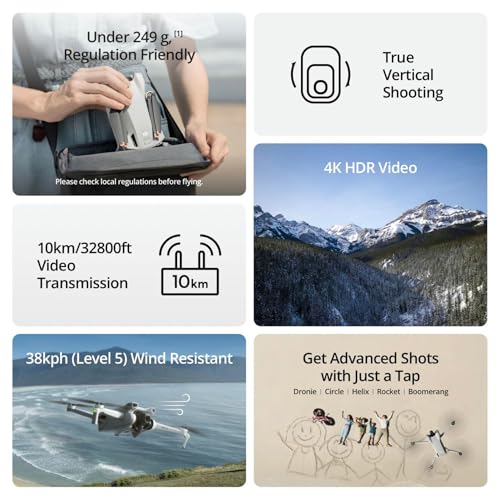
I found the Mini 3 to feel solid and refined in hand: foldable, compact and right at DJI’s under?249 g threshold (about 248 g). The Fly More combo adds a shoulder bag and charging hub without making travel cumbersome — you still get true pocketable convenience with extra kit.
Hand?feel & portability — Mini 2 SE
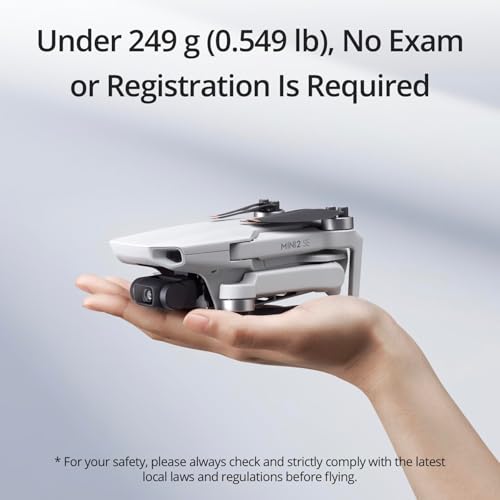
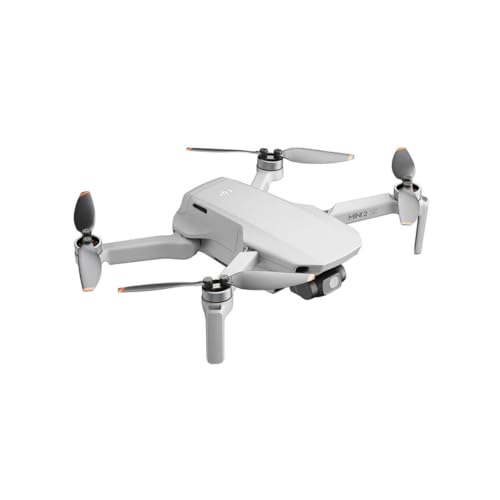
The Mini 2 SE is even simpler: very lightweight, easy to pack, and designed for minimal fuss. Its smaller feature set keeps the carry?weight and learning curve low, which I appreciate for quick trips.
Battery options and practical flight time
Flight performance, sensors, transmission and beginner features
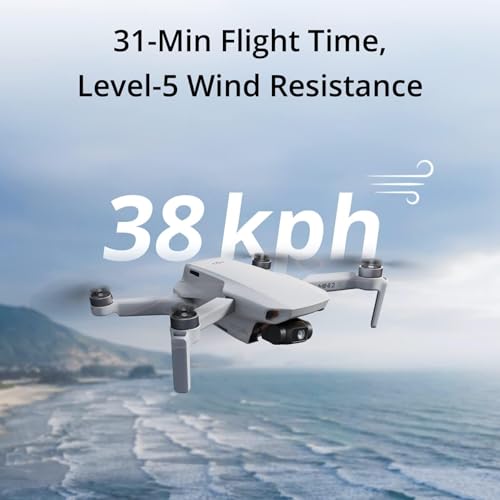
Both drones handle wind well (roughly similar resistance specs in calm tests) and advertise ~10 km OcuSync/OCU-like ranges — in practice you’ll get far less due to interference and line?of?sight limits. The Mini 3’s package includes the DJI RC with built?in display for quicker setup and more reliable screen visibility; the Mini 2 SE relies on your phone + RC?N1 style controller. Neither model offers full omnidirectional obstacle avoidance in these Amazon listings, but both have GPS RTH, precise hovering, and easy auto takeoff/landing that make them excellent for beginners and travelers who need weight?compliant drones.
Imaging, Smart Features and Value — Which Fits Your Use Case?
Camera and image quality
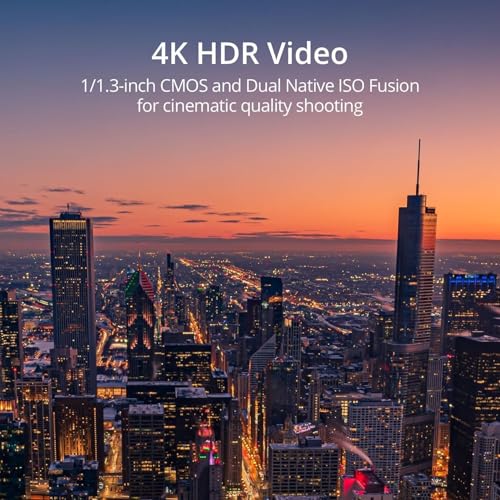
I look at sensor size, resolution and real-world footage. The Mini 3 (Fly More Combo) shoots true 4K HDR and 48 MP stills with a larger sensor and dual-native ISO, so daylight detail and low-light shots are noticeably cleaner and retain dynamic range. The Mini 2 SE records QHD/2.7K and 12 MP stills—good for casual use but softer in shadows and at high ISOs.

Stabilization, tracking and creative modes
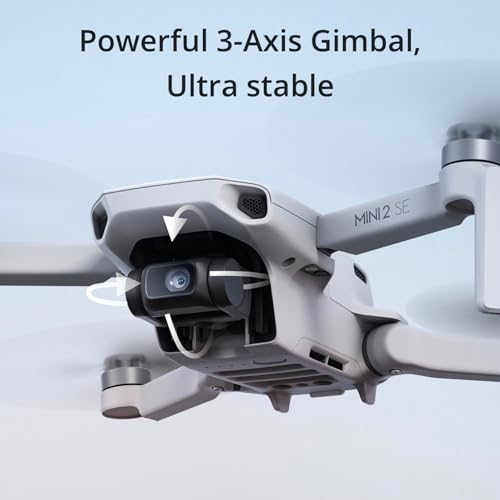
Both use a 3-axis gimbal for steady footage, but the Mini 3’s gimbal plus its processing yields smoother, more cinematic pans and better stabilization in higher winds. Intelligent modes (QuickShots, Panorama, ActiveTrack) are more capable on Mini 3; Mini 2 SE covers essential QuickShots and automated templates for fast, reliable results.
Value: Fly More Combo vs. Mini 2 SE
I weigh cost vs. capability. The Fly More Combo adds two batteries, charging hub and the DJI RC—more flight time and an integrated display for a higher price (~$719). The Mini 2 SE (~$375) keeps weight, price and simplicity front?and?center, ideal for travelers and beginners who want sub?249 g compliance and lower upfront cost.
Feature Comparison Chart
Final Verdict — Which Should You Buy?
I declare the Mini 3 Pro Fly More Combo the overall winner for image quality, smart features, and extended combined flight time.
I recommend the Mini 2 SE if you need an affordable, under 249 g, easy to carry drone.
Quick question — does the Mini 3 still keep the same 10km video transmission as the Mini 2 SE? I read both listings say 10km but I’m skeptical how that works IRL ?
Also, are there any major differences in auto return/home or GPS lock between them?
Yes, both list up to 10 km transmission in optimal conditions (FCC-clear line of sight). Real-world range is much less — often a few kilometers depending on obstacles, interference, and local regs. Both have solid RTH and GPS reliability, but the Mini 3’s newer system and DJI RC interface can feel snappier.
IRL I’d never push either to 10km — too risky and illegal in many places. For typical hobby flying, both are fine for stable signal and RTH.
Me: buys the Mini 2 SE because ‘I don’t need 4K’.
Also me, two weeks later: “Why did I not get vertical shooting and three batteries??”
Real talk: the Mini 2 SE is great value but I keep catching myself wishing for the Mini 3’s features. If you can afford the Fly More Combo, you’ll thank yourself for the extra footage quality and battery life.
PS — anyone else accidentally record upside down trying to do vertical shots? ?
One more: consider ND filters for smooth footage — they help more than you expect, especially in bright outdoor shots.
If budget’s tight, get the Mini 2 SE now and upgrade later — DJI often has trade-in promos. But yes, the extra battery life on the Fly More combo is addictive.
Thanks for the tips — I’ll try ground practice next time. Also watching YouTube crash compilations is maybe not the best prep method ?
Hahaha yes. I did that on my first try — pro tip: put the drone on a flat surface and practice tilting the camera before flight.
Haha, been there. Vertical shooting is intuitive once you switch modes, but practicing orientation on the ground helps avoid rookie flips.
I appreciated the comparison notes on gimbals and stabilization. A few thoughts/questions:
1) Mini 3 is 4K — how much better is that vs the QHD on Mini 2 SE for editing tight crops?
2) Weight: Mini 2 SE being under 249 g makes it exempt from some registration rules where I live. Does Mini 3 Fly More Combo push you over any thresholds?
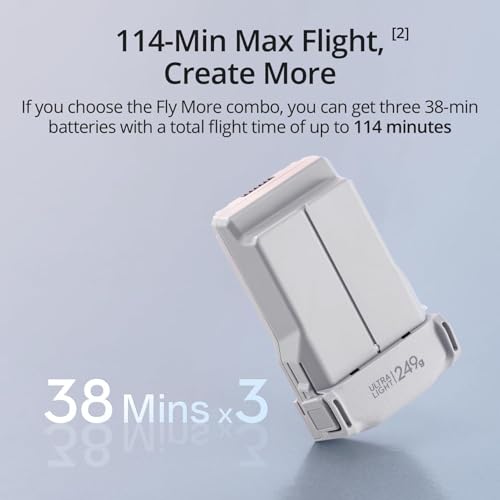
3) Battery life math: the Fly More Combo lists 114-min total — that’s obviously with three batteries, right? Does anyone find battery swap in the field easy?
Adding: if registration is a dealbreaker, confirm local rules — some countries also regulate by camera capability, not just weight.
On the weight: the Mini 3 Pro (not sure about ‘Fly More Combo’ bundle) had a version ~249g, but the extra accessories don’t change drone weight. Always double-check the exact SKU weight on DJI’s site.
Good points. 1) 4K gives more headroom for cropping/stabilization in post compared to QHD. 2) Check the Mini 3 variant — some Mini 3 models are still under 249 g depending on config; confirm the exact model weight before buying if regs matter. 3) Yes, 114 min is cumulative across batteries; swapping is quick but bring a small organizer and a power bank for charging if you won’t be near outlets.
I swap batteries on hikes all the time — one tip: store spares in a temperature-stable spot (not in direct sun) so they don’t overheat or lose capacity.
I’m leaning Mini 3 Fly More Combo because I do short client videos and reels. The vertical shooting + 4K is what wins me over.
I know Mini 2 SE is lighter and cheaper, but the creative flexibility of 4K and longer total flight time seems worth it for my small business.
Any freelancers here who’ve switched and noticed a real difference in client feedback?
Yes — freelancers often report better client reactions with 4K footage and the ability to crop/reframe without losing detail. The Fly More Combo’s extra batteries also reduce downtime between shoots.
I switched from Mini 2 to a 4K model last year and clients definitely noticed the sharper footage on promos. Worth the investment if you’re using it as a business tool.
Nice breakdown — I came here trying to decide between the Mini 3 Fly More Combo (DJI RC) and the Mini 2 SE.
Pros of Mini 3 that sold me: true 4K, vertical shooting (great for social), and the extra batteries for that 114-min total — game changer for short trips.
Mini 2 SE is tempting because it’s under 249 g and cheaper, and honestly 31 min per battery is fine if you’re not filming all day.
If you travel a lot and want better footage, Mini 3 seems worth the extra money. But for casual weekends, Mini 2 SE makes sense.
My main worry: portability vs capability — anyone else feel the same?
Also consider accessories — the Fly More Combo usually has chargers and spare props, which saves hassle on trips.
Agree with Sarah. I carry mine in a small backpack and the extra batteries are worth it. Mini 3’s vertical mode is actually super useful for reels.
Totally — portability vs features is the classic tradeoff. The Mini 3 Fly More Combo gives you longer total flight time with the extra batteries and more versatile shooting (vertical + 4K). If weight and price are top priorities, the Mini 2 SE is the practical pick.