
Unlock the Secrets of Reading Schematics
Mastering electronic schematics can elevate your tech skills dramatically. This guide reveals three essential secrets to help you read and understand them like a seasoned professional. Get ready to enhance your abilities and boost your confidence in electronics!
What You'll Need to Get Started
Dive into the Basics of Circuit Symbols
Why Knowing Your Symbols is Half the Battle!Familiarize yourself with common electrical symbols to decode schematics effectively. Start by collecting a reference guide, which lists essential symbols such as resistors, capacitors, diodes, and transistors. Knowing these symbols lets you visualize connections and components quickly.
Practice identifying symbols in various schematics. For instance, when you see a zigzag line, recognize it as a resistor. Consider how frustration with a mysterious circuit can turn into understanding once you identify the symbols and their functions.
Engage with interactive tools or apps that quiz you on symbol recognition. Regularly challenge yourself to trace out simple circuit diagrams, making it easier to grasp relationships between components as you build familiarity with the symbols.
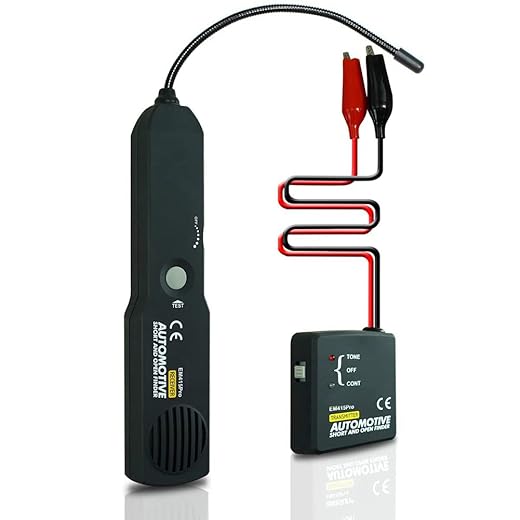
Learn to Trace the Flow of Electricity
Follow the Path and Empower Your Understanding!Identify the flow of electricity in a circuit by following paths between components. Start at the power source and determine how the current travels through each part.
Visualize the journey: for example, when electricity flows from a battery to a light bulb, it travels through wires, illuminating the bulb as it passes. This simple action demonstrates how different parts work together.
Use colors or markers to trace the paths on a printed schematic. Highlight the connections from the power supply to resistors, capacitors, and other components. By doing this, you’ll develop a clear understanding of how each element interacts within the circuit.
Regularly practice on varied schematics, gradually increasing complexity. This hands-on approach transforms you from a passive reader into an active problem-solver, enabling you to troubleshoot effectively.

Practice with Real-World Schematics
Experience Makes Perfect — Don’t Skip This Step!Apply your knowledge by engaging with real-world schematics. Start by collecting schematics from various devices, such as old radios or simple electronic kits. This provides tangible examples to study.
Build circuits using components from the schematics you collect. For instance, if you find a schematic for a basic LED circuit, gather the parts and construct it. This hands-on activity reinforces your understanding of how each element functions in practice.
Analyze the results by testing your circuit. Observe how changes impact performance, and refer back to the schematic to troubleshoot any issues. This iterative process solidifies your skills and boosts your confidence.
Join online communities or forums to share your projects and get feedback. Connecting with other electronics enthusiasts enhances your learning experience and exposes you to diverse schematics and techniques.
Your Journey to Proficient Schematic Reading Starts Now!
By mastering these three secrets, you’re well on your way to reading electronic schematics like a pro. Try out your new skills, share your results, and embrace the exciting world of electronics waiting for you!
This guide is like a breath of fresh air! Not only did I learn a lot, but it’s actually fun reading schematics now. Thanks a ton! Any recommended books to dive deeper into the subject? ???
We’ll compile a list of recommended books and share them soon! Happy reading!
This is super helpful! ? Reading schematics used to feel like reading hieroglyphics, but now I’m feeling more competent. Are there any resources you guys recommend for practicing real-world schematics?
Glad you found it helpful, Emily! There are several online platforms where you can find practice schematics. We’ll also share some links in our next update!
I found some great practice sheets on electronics forums! They’ve been really useful for me.
This is a solid resource! I’ve been dabbling with electronics for a while, but just reading schematics always threw me off. I’m excited to put these tips to use!
Honestly, reading schematics is kind of like learning a new language, isn’t it? I still feel like I’m translating hieroglyphics. ? Thanks for the tips here; they feel like a good foundation!
Exactly, Ashley! The more you practice, the more fluent you’ll become. Happy learning!
Mixed feelings about this… like, I love the enthusiasm, but I’m still struggling on the basics. I wonder if there are any video tutorials to help with tracing the flow better?
YouTube has tons of great content on this! I watched a few that really helped clarify my understanding.
Definitely! Video tutorials can be super helpful. We’ll provide some links in the comment section soon!
Does anyone have any tips on where to apply these skills? I feel a bit lost on how to actually use this in projects. Looking for some practical advice!
I recommend joining a local maker group. They’re usually super welcoming and can point you in the right direction.
Good question, Tina! Start with DIY electronics projects. They’re a great way to apply your schematic reading skills!
Wow, this guide really breaks down the basics well! ? I’ve always found schematics intimidating, but knowing I can start with symbols makes it feel more approachable. Can’t wait to dive in and actually practice with some simple circuits! Anyone else here tried it yet?
Thanks for your feedback, Sarah! Starting with the symbols is definitely the best way to build confidence. Let us know how it goes!
Just started going through the symbols section, and it’s not as hard as I thought! ?
Lol, I thought I’d never be able to read these things. I mean, who comes up with these symbols anyway? ?? Thanks for the tips! Looking forward to breaking it down step by step!
You’re welcome, Kaleb! It’s all about taking it slow and finding the fun in it. Stick with it!
I mean, tracing the flow of electricity is cool and all, but how do we know we’re not just messing things up? Is there a way to test our understanding without frying something? ?
Great question, Mike! We recommend starting with lower voltage setups for practice until you feel more confident.
That’s a good point! I messed up a few circuits back in the day. Just be careful with your testing tools and double-check your work before you power things up! ?
I’m confused by some of the symbols, though. Like, how do I know what each one means without constantly looking them up? Anyone else feel that way?
That’s a smart idea! I think I’ll make a cheat sheet for all the symbols I find tricky!
You’re not alone, Dave! Keeping a reference chart handy can help, or maybe make your own while learning!